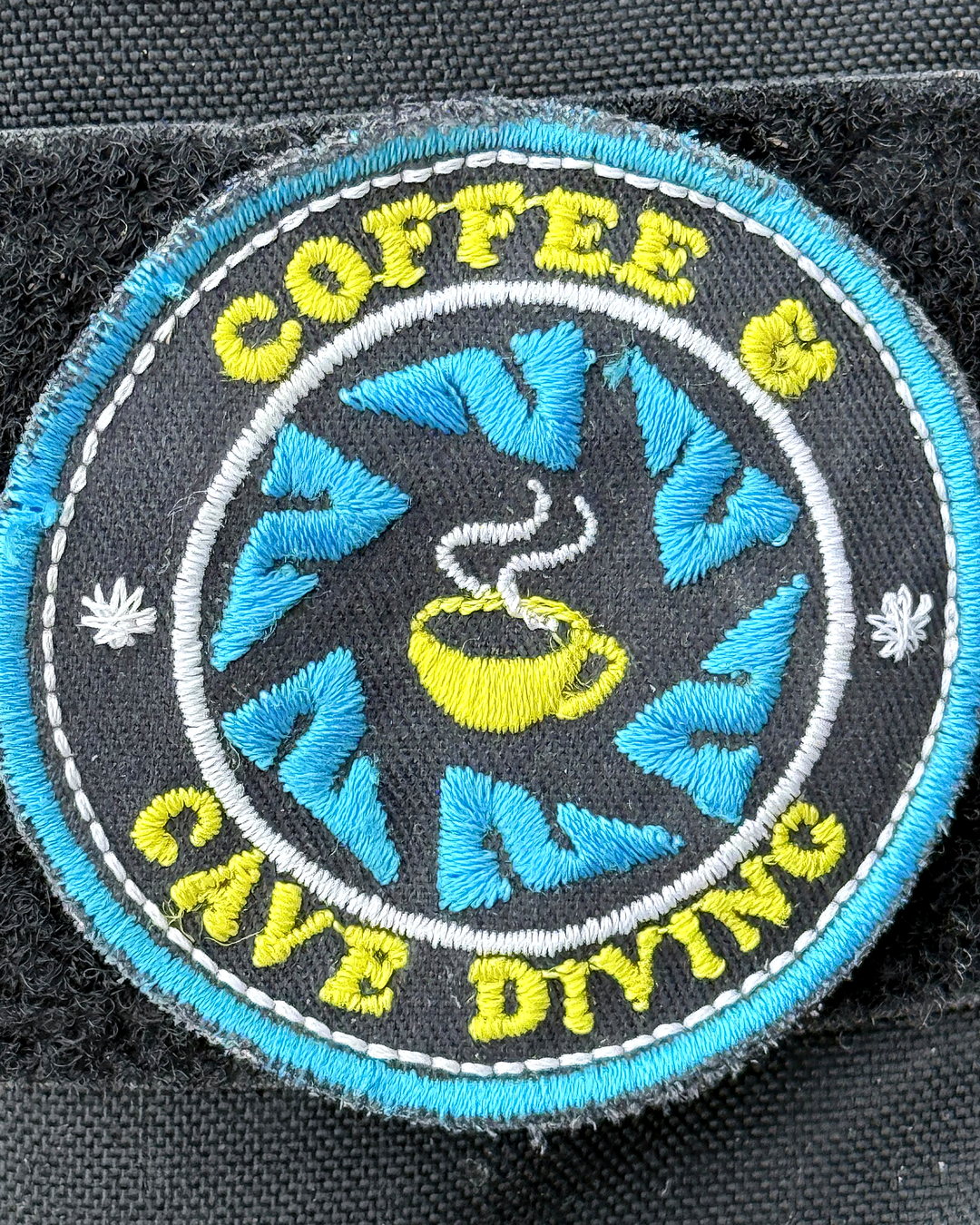
Coffee and tea are not beverages. They are worldviews. What tea was to feudal Japan, coffee was to the medieval Middle East. Both cultures understood the same thing: a drink can be more than a drink. It can be a switch in the mind. This article is not about coffee. It is about the ritual that comes before the dive, and about the pre-dive check as the mental entry point into it.
Two worldviews in a cup
Samurai are said to have taken tea before combat. Not out of thirst. The slow heating of the water, every movement governed by form, the ritual was a way of emptying the mind. What remained was focus.
In the Middle East of the fifteenth century, the same principle appears in a different shape. The Arabic qahwa, the origin of our word coffee, once meant “the dark,” linguistically close to the word for wine. For a cave diver it would be difficult to find a more fitting root. The dark is not a place you rush into. It is a place you enter prepared.
The three cups
Among the Bedouin, this developed into a ceremony of three cups, each with its own meaning:
- Al Heif, the host’s cup. He drinks it himself first, as proof that the coffee is sound.
- Al Seif, “the sword.” The oath. Whoever drinks it declares readiness to stand beside the host when it matters.
- Al Keif, the enjoyment. Taken slowly. Stillness. Readiness.
“Al Seif was never a drink against fear. It was a promise: I will stand with you when it becomes serious.”
Any diver reading that oath recognises it immediately. Al Seif is the buddy commitment. I am here for you. I will not leave you alone. We are a team, not two divers who happen to be at the same site. That commitment is settled in the pre-dive check, before anyone gets in the water. Skip it and you dive next to each other rather than with each other.
What the research says
What those warriors knew intuitively is now reasonably well documented. Studies on mental simulation show that rehearsing a sequence of movements in detail activates brain regions similar to those used during actual execution.
“A diver who visualises a dive completely and across all senses has already run it once, neurologically.”
Across all senses means more than seeing the route. It means feeling the cold, the breathing resistance on the loop, the weight of the cylinders. The more complete the simulation, the more stable the mental preparation.
The pre-dive ritual: ceremony, not checklist
Many divers treat the pre-dive check as an obligation, something to be dealt with before the real diving starts. That misses the point. The check is the dive. It is the first part of it.
I. Kitting up, deliberately rather than mechanically
After a hundred repetitions every movement is automatic. That is precisely why it demands attention. Slowly. Every buckle. Every bolt snap. Every hose.
II. GUE EDGE as a sequence, not a tick list
Goal. Unified Team. Equipment Match. Exposure. Deco. Gas. Environment. The order is familiar. What matters is how it is thought through.
| Step | What it is actually about |
|---|---|
| Goal | One clear sentence: why are we getting in the water? |
| Unified Team | Roles, responsibility, leadership. Short. Precise. No debate. |
| Equipment Match | Do you see your own system on your buddy? Is everything where it belongs? Does it work, now? |
| Exposure | Depth and time |
| Deco | The way back |
| Gas | The limits we do not cross |
| Environment | Everything that can stop you |
Not ticking boxes. Not explaining. Making sure everyone holds the same picture.
III. Visualisation: diving the dive once in silence
Before entry: eyes closed. Run the dive from start to finish, realistically rather than optimistically. When do the stages come off? What is the bailout range? What is the first action in zero visibility?
IV. The last silence
No small talk. A short look at your buddy. Both present, both calm, both ready. That is Al Keif. Then you get in the water.
Why this is survival-relevant
In open water a skipped check often stays without consequence. In a cave the balance shifts. Mistakes do not disappear, they travel with you. And the further you penetrate, the less room remains to correct them. A diver several hundred metres into a flooded cave who discovers that the plan or the roles were never unambiguous is not in a position to adjust things quickly.
Even so: before long cave dives I am nervous. Not loudly. Not in panic. But noticeably. That nervousness is not something to suppress. It signals that what lies ahead carries weight. Fear is not a fault in the system. It is part of it. What matters is what you do with it.
I run the dive through my head once. Calmly. Step by step. Not sanitised, but honest. The first metre underwater. The first restriction. Handling the equipment. The breath on the loop. And somewhere in that sequence something shifts. The unease quietens. Thinking sharpens. Movement gains structure.
That is my pre-dive. Not visible. Not loud. But complete. What remains at the end is not courage. It is something better: calm, focus, readiness. A dive does not begin where the water closes over the surface. It begins before that, or not at all. The silent ritual is not an addition. It is the moment uncertainty turns into clarity.
The patch on the suit
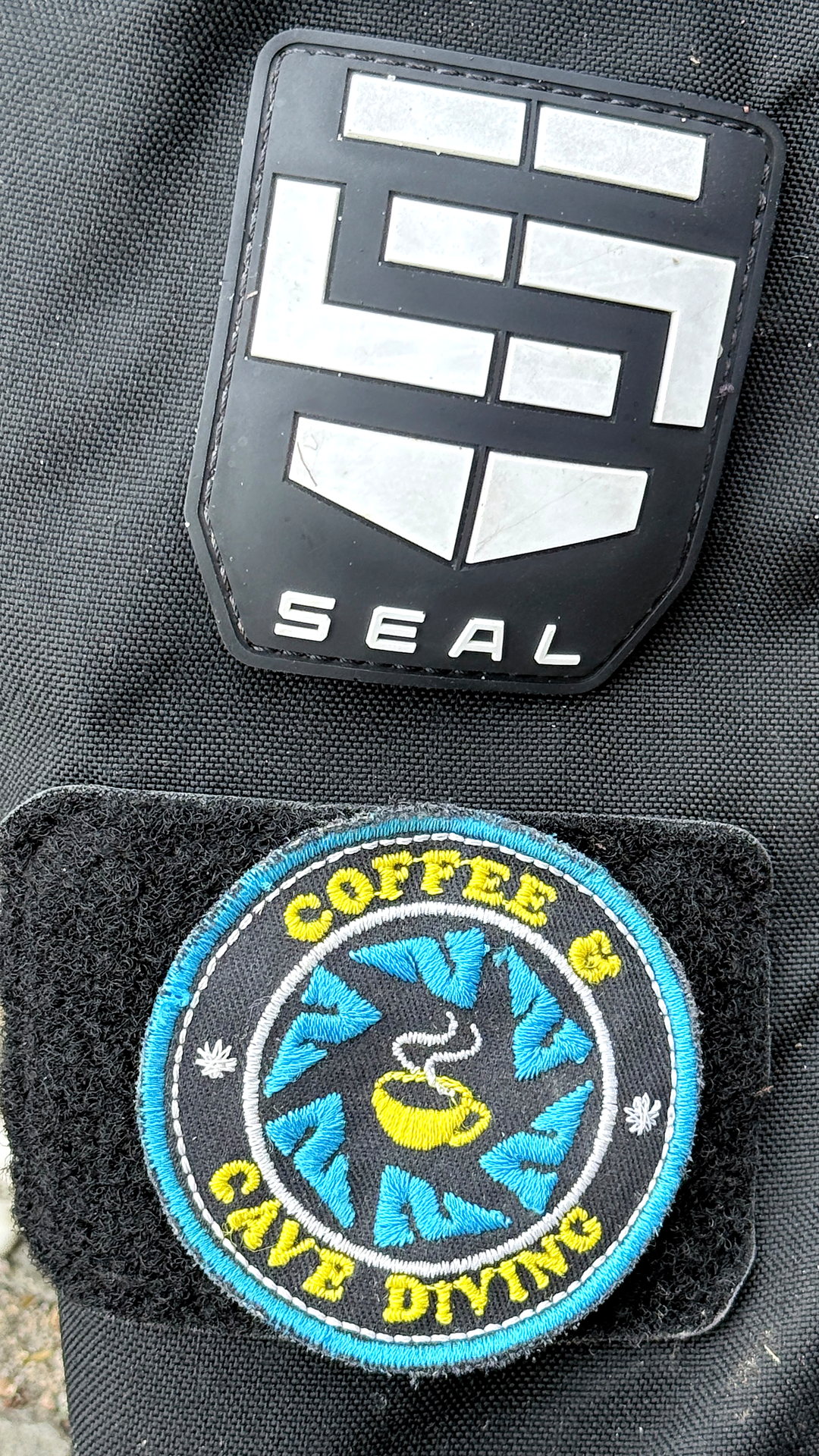 “Coffee & CaveDiving,” a patch I wear on my drysuit. Not as decoration. It is my Al Keif: the coffee before entry, the winding down, the gathering. When I put it on, the dive has started. Some of my dive partners wear it too. Not as a badge, but because we mean the same thing when we fall silent before entry. The dive begins in the head, not in the water.
Closing thought
Al Seif was never a drink to make anyone brave. It was a promise: I will stand with you when it becomes serious. That is the core of every team dive. Not the equipment, but the reliability of the person next to you. A diver who goes quiet before entry is checking gear, plan, and team at the same time. Only after that is everything done that lies within your own control.
Centuries ago people drank the dark before setting out into the unknown. Today we dive into it. The principle has not changed.
“The diver standing quietly at the shore, looking at the water before entry, is not hesitant. He is the only one who is genuinely prepared.”
Christof Müller GUE Fundamentals · Doubles & Drysuit · SDI/TDI Sidemount & Advanced Nitrox & Deco Pro Instructor · Deepstop Schwetzingen